
What shapes pro-environmental behaviour in certain individuals?
Perspectives from international, national and local volunteers paving the way for cleaner coastlines

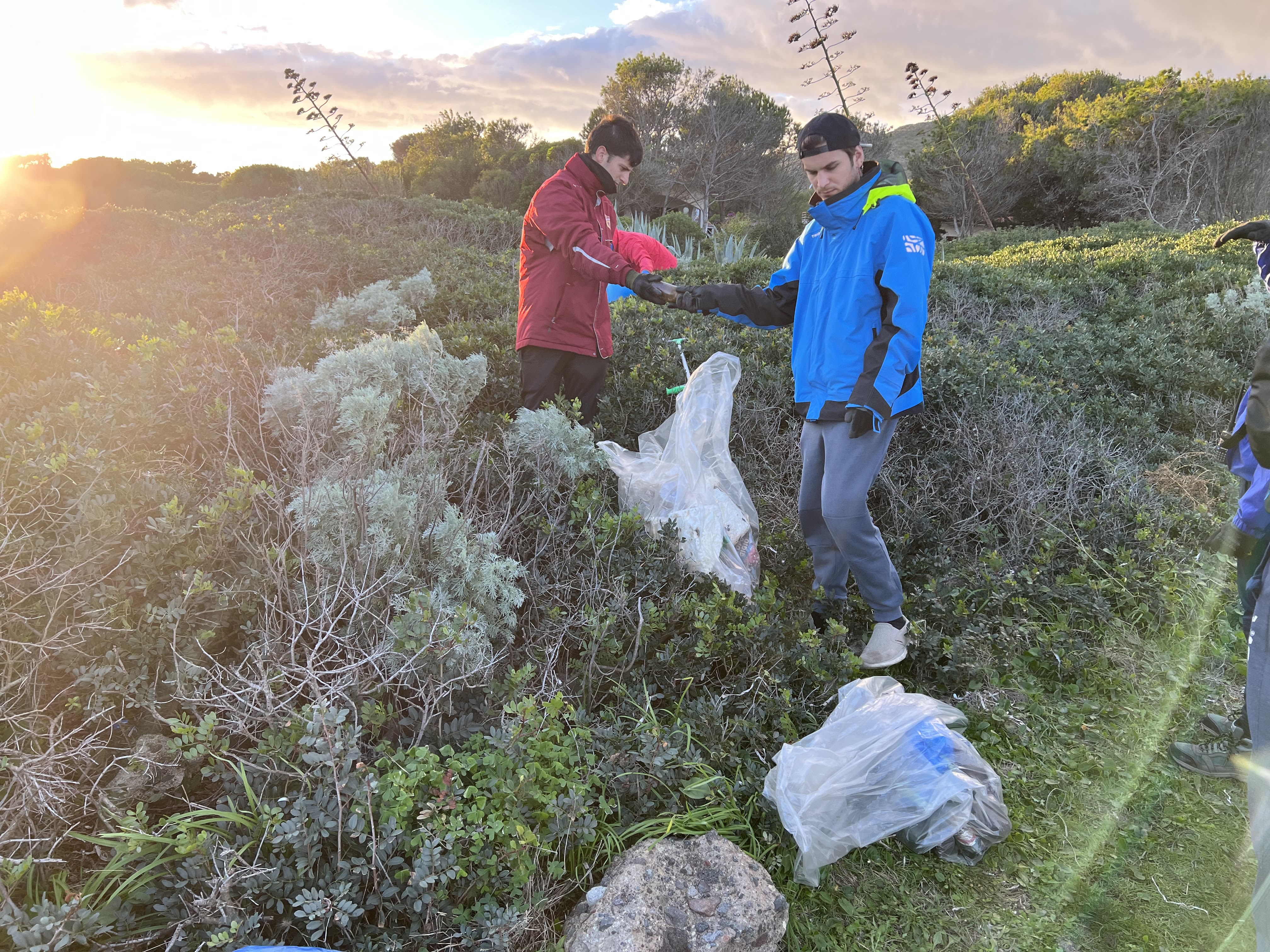
“I think wanting to save the environment is an innate feeling one has” is what one of the volunteers from Mare Vivo South Sardinia — a branch of a much larger non-profit Italian environmental organisation dedicated to the safeguard of the sea — said to me.
For Albano Salis, who founded the South Sardinia branch five years ago, cleaning the shoreline which confined with his house was a choice that came to him naturally after witnessing the degradation of his surroundings.
Anna Kowalska realised she needed to take action after a storm surge in April 2018 — while on a walk on the beach, Anna saw another woman picking up the rubbish that had been washed ashore. It was then that she decided to found Clean Coast Sardinia, a local environmental organisation which already counts dozens of volunteers.
Tired of seeing litter accumulating on the coastlines of one of the most popular holiday destinations in the Mediterranean, Albano and Anna concluded they had to take matters into their own hands. But they’re not alone.
Worldwide the number of environmental organisations is ever-growing. Italy alone boasts 25 of them, according to ecohub — an online directory of environmental NGOs. However, this database doesn’t include other unofficial organisations such as Mare Vivo, or local ones such as Clean Coast Sardinia. And it surely doesn’t include those people who, from time to time, decide to dedicate a fraction of their days to an environmental cause.
“The first thing I did was creating an Instagram page where I started showing that I was litter-picking. And soon enough, a lot of people started messaging me to tell me that they shared my values and others started saying that they were doing the same on their own,” Anna recalled.
When Heidi Solba, who is now President of World Cleanup Day, participated in the first Estonian cleanup in 2008, she had no idea that from that point onwards, a lot of changes in society would have happened. In fact, that one cleanup soon snowballed into a yearly reoccurrence adopted by 191 nations worldwide.
“Many countries saw what Estonia was doing and took inspiration from it. In 2015, the organisation behind the cleanups realised that they needed a better model to follow so that the whole world could be engaged. That’s how we came up with the idea behind a World Cleanup Day for the first time,” said Heidi. “But what we really wanted was to have strong changes in behaviours and we were aiming to engage at least 5% of the global population. This was our goal.”
The word about cleaning up the environment was spreading like fire.
In 2016 non-profits such as Greenpeace joined together to create the Break Free From Plastic (BFFP) movement. “Over the years these organisations realised that there was a need for a movement demanding specific things. These groups were aware of how the amount of waste management infrastructure that we have globally really cannot offset the amount of plastic that's still being produced,” explained Tiara Samson, Movement Building Associate at BFFP.
Albano, Anna, Heidi and Tiara are all people from different walks of life, holding various jobs, and living in countries that are not even adjacent. But there is one thing that they all have in common: a shared sentiment to save their land.
Where does this burning desire come from? What drives pro-environmental behaviour in certain people? Psychology might be able to uncover the answer.


Some of the weirdest items Mare Vivo volunteers have found through the years
Some of the weirdest items Mare Vivo volunteers have found through the years
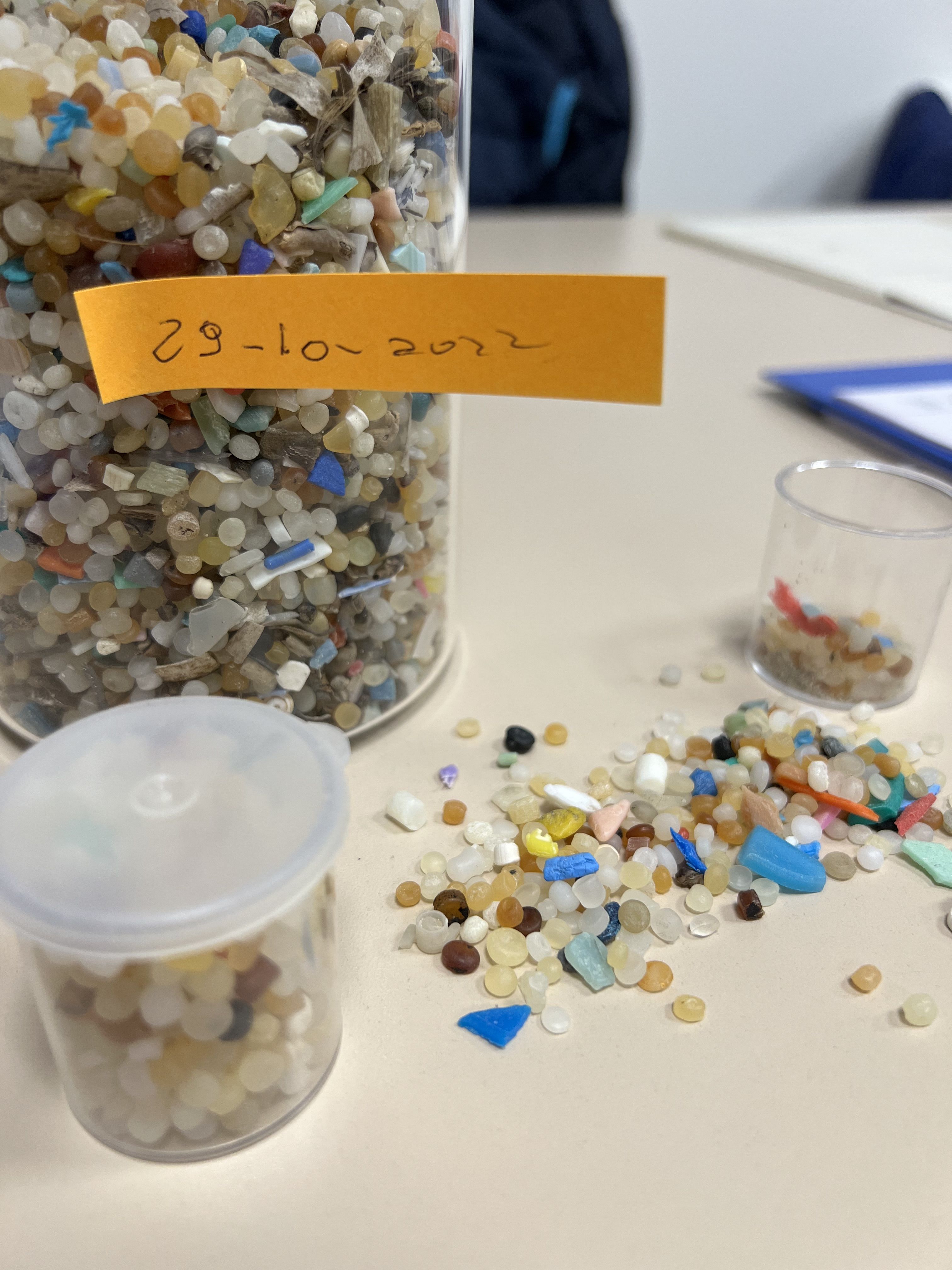
Microspheres found in large quantities on sandy beaches in Sardinia
Microspheres found in large quantities on sandy beaches in Sardinia
Unconscious motivations
In Denial of Death (1973), Ernest Becker argues that the whole human experience can be summarised as a coping mechanism to deal with mortality. This state of awareness causes a great amount of anxiety in the population, who consequently resorts to so-called ‘immortality projects’ by for instance identifying with a religion, campaigning with a political group, devoting one’s life to a career, or trying to leave a legacy — anything that could make people escape from the uneasiness of the human condition.
Becker’s idea on mortality paved the way for what later on became known as Terror Management Theory, or TMT, which postulates that humans seek a sense of self and symbolic immortality in order to evade death anxiety.
Researchers throughout the decades have proved that TMT can be applied to a wide spectrum of human behaviours, including environmental activism.
In one of her research areas at the Society, Environment and Emotions Lab in Canada, Professor Sarah Wolfe has studied how emotional drivers, such as TMT, can shape environmental governance.
In her systematic review of the use of TMT in environmental research (2022), she argues that the theory should be used to better address people’s attitudes and behaviours towards climate change. In that research she posed the following question: “Is mortality awareness so influential that millions of people will deny or avoid taking the necessary actions to circumvent the worst climate change impacts?”.
Wolfe, as well as other researchers, continues to explain that when individuals are faced with death thoughts, they either activate ‘proximal defences’ — anything, including denial, that can temporarily distract the mind — as well as ‘distal defences’ — which are defensive responses that are not immediately associated with mortality awareness. The latter category is the one where environmental activism most likely falls in to.
Associate Professor at the University of Waterloo, Canada, Stephen Quilley, validates this theory when he says that depending on pre-existing beliefs, people unconsciously engage in pro-environmental activism or not.
“A strong finding of TMT is that in the face of a death prime, we tend to become more defensive and more engaged with our existing hero/immortality projects. This means that if you show someone who is an environmentalist already an imagery relating to the devastating impact of climate change, they are certainly likely to become even more fervent in their environmentalism.”
“But if the dominant hero/immortality project concerns consumption and consumerism, the result is quite counterintuitive. Show one of those people climate change and environment-related images, and it turns out that they are much more likely to go out and buy a Porsche or go on a shopping spree.”
In other words, what Wolfe and Quilley argue is that mortality awareness seems to have an impact in the way people behave towards environmentalism. But before addressing the drivers which influence certain people to unconsciously choose to engage in environmental action as their ‘immortality project’, the scale of environmental threats — such as marine litter in this particular case — needs to be redefined. Has the pollution crisis become so tangible that it is triggering the distal defences of more and more people?
An insurmountable problem
Marine litter goes hand in hand with a much bigger threat — the plastic pollution crisis. The International Union for Conservation of Nature estimates that at least 14 million tons of plastic end up in the ocean every year while plastic itself is responsible for 80% of all marine debris.
Out of all the plastic marine debris, 80% comes from the land, whether through littering, rivers overflowing, inadequate waste management or illegal dumping. The rest originates mainly from the fishing industry and related activities.
Asia is one of the major polluters of the oceans, with the Philippines emitting 356,371 metric tons of plastic in 2019. And while, the biggest plastic accumulation islands — such as the Great Pacific Garbage Patch — are more common in the open ocean, enclosed seas and smaller marine environments are still affected by littering.
A study undertaken on litter samples from the Mediterranean Sea has shown that “the global-scale distribution of plastic pollution clearly identifies it as a region of particularly high plastic concentration.”
Another study also found that micro plastic concentration in the Mediterranean Sea, in particular, “is approximately four times greater than the North Pacific Ocean”.
And Sardinia, due to its central location in the Mediterranean, is not spared from pollution either. A 2021 research conducted on samples taken from 13 different Sardinian beaches from 2013 to 2016, concluded that the region presents “high levels of plastic pollution”. The authors further referred to Sardinia as a “sink for all the plastic that is transported by sea currents” and made the suggestion of intensifying beach cleaning campaigns in order to reduce pollution at a local scale.
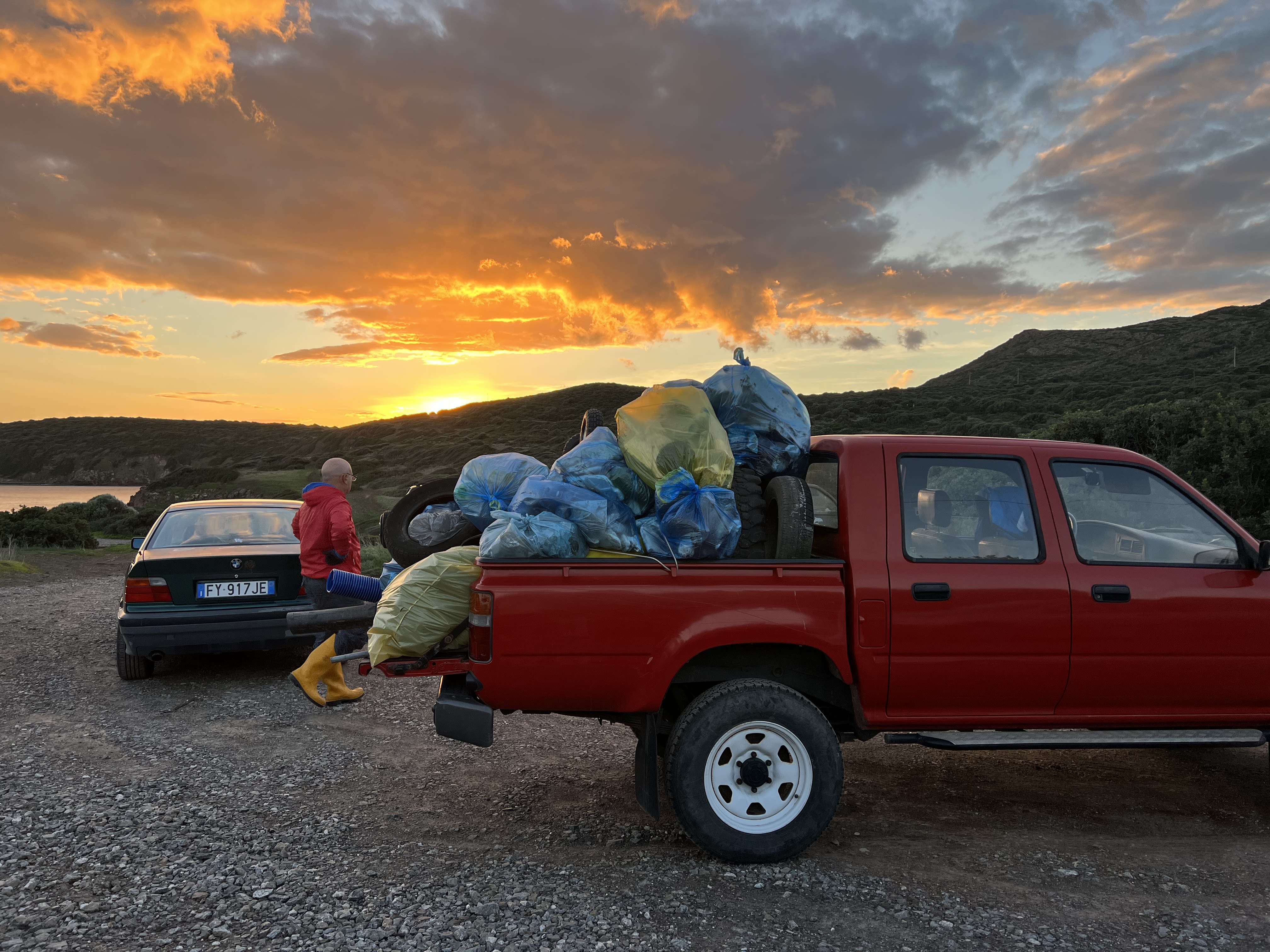
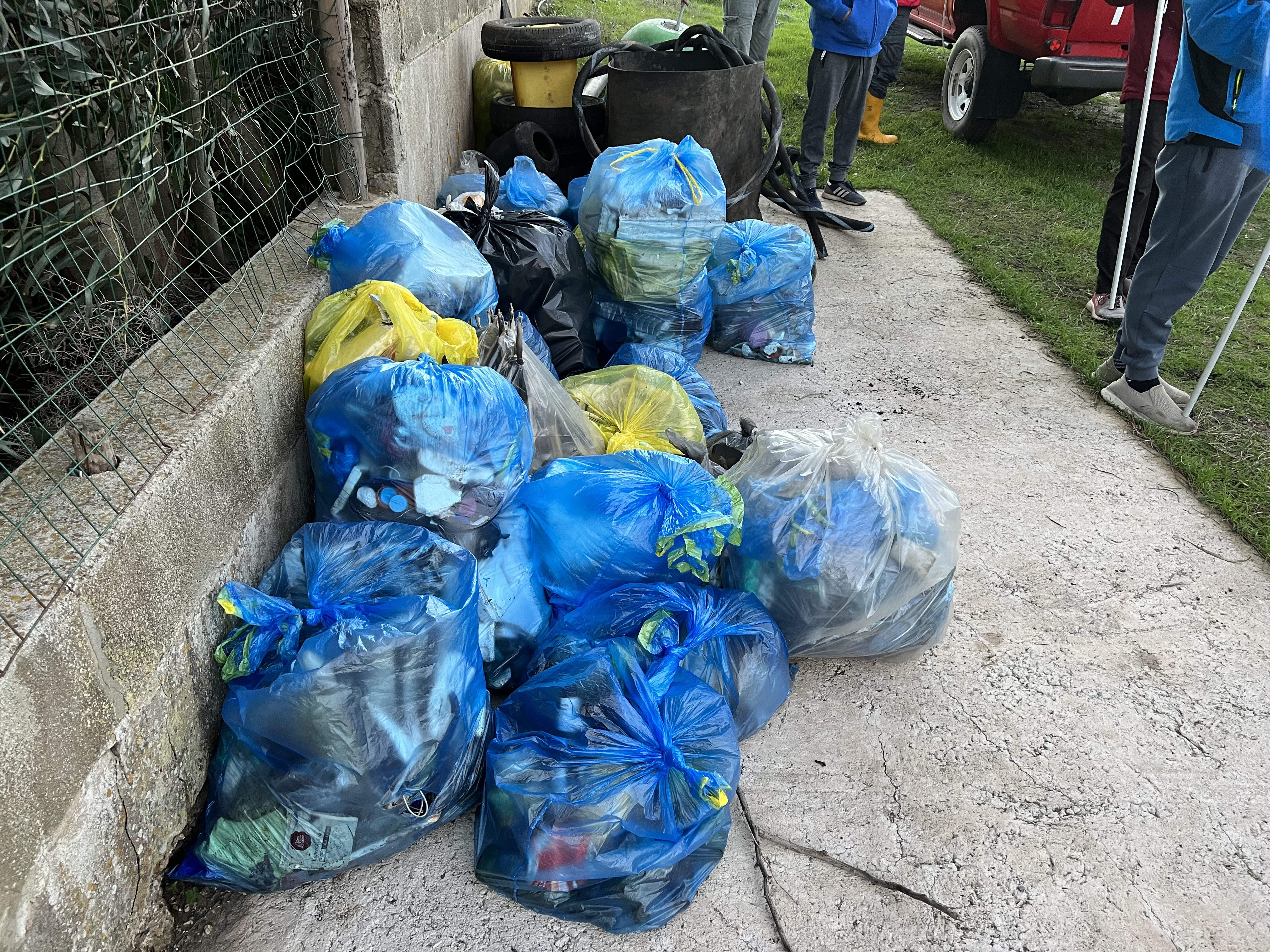
The study results are in line with the amount of rubbish Mare Vivo and Clean Coast Sardinia collect during their cleanups. On November 26, during only 3 hours of litter-picking, Mare Vivo took 522 kg of litter out of two beaches in South West Sardinia.
Waste displacement and lack of recycling facilities in particular are two of the major factors that influence the amount of litter dumped in marine environments. When reflecting on the variety of rubbish that the Mare Vivo volunteers find during the cleanups, Albano told me that multiple times they came across home furniture discarded near the beach, such as fridges and TVs, as well as car engines illegally dumped on the seabed.
Anna had some similar experiences with the rest of her team. “Have you ever wondered why there’s so much weird rubbish at the beach? No one brings domestic-specific waste, such as laundry detergent bottles, to the beach. Yet, we find them.”
Waste management disorganisation stretches even to the designated rubbish centres in the region — called ecocentri — which often can’t accept large waste materials due to a lack in recycling facilities. Anna told me of a time when one of her relatives had to dispose of an old bathroom sink and didn’t know where to go because the allocated ecocentro didn’t accept it.
“I’m not suggesting those people that dump waste, such as furniture, near the beach are right. It’s definitely wrong. But I understand that people are tired and confused. Imagine taking a very big item to the centre, after paying the rubbish tax every month, only to find out that they can’t accept it and you have to drive an extra hour or so. Some people will simply dump it in a hidden area on their way home, instead of making the effort.”
Given the magnitude of the plastic pollution crisis and the challenges related to waste management, it is unsurprising that residents in regions like Sardinia, where beach tourism plays a significant role in the economy, feel an urge to address the marine litter issue.
The role of education
While TMT explains that mortality awareness causes a dichotomy between people choosing to engage in pro-environmental actions and those who don’t, the Theory of Planned Behaviour (Ajzen, 1985) postulates instead what are the deciding factors for those people who choose to act environmentally.
Ajzen identified three psycho-social drivers that predict behaviour: attitudes, subjective norms and perceived behavioural control, or PBC. In the context of environmental action, attitudes towards the environment have proven to positively influence related behaviours. But attitudes and subjective norms are not intrinsic, and therefore must derive from education and direct experience.
The role of education, in particular, seems to be one of the pillars which lays the foundation of the majority of environmental groups.
Legambiente, one of the biggest Italian NGOs dedicated to the protection of the environment, currently operates six different campaigns and events in collaboration with schools across the country.
“It’s absolutely fundamental that kids start to learn about the environment from a young age. It becomes easier for them to develop environmentally-friendly habits when they’re older, on top of the fact that when they get home they will probably convince their families to adopt sustainable practices too,” told Elisa Scocchera, researcher working for Legambiente.
Cristina Fiori, Programme Coordinator at Worldrise — an Italian environmental organisation which currently counts 14 different projects — told me about the #Batti5 campaign aimed specifically at schools. The project aims to mix creativity with environmental education, and it is divided in three parts: the first one is usually a lecture on the damages marine litter does to the environment, which is then followed by a trip to a nearby beach in order to clean up plastic, and the third one involves the creation of artwork with the litter collected during the day out.

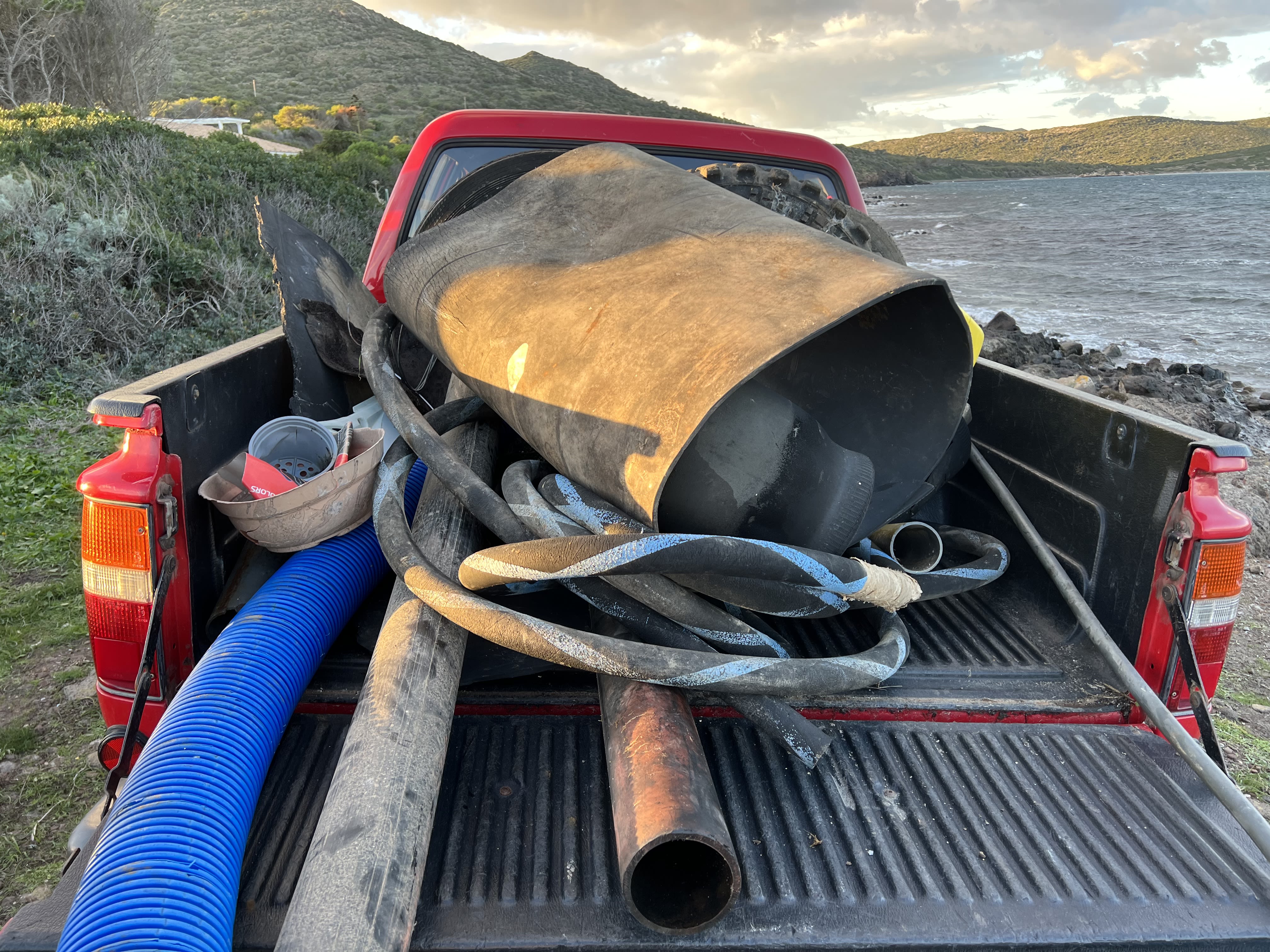
Bulky waste found during the cleanup
Bulky waste found during the cleanup
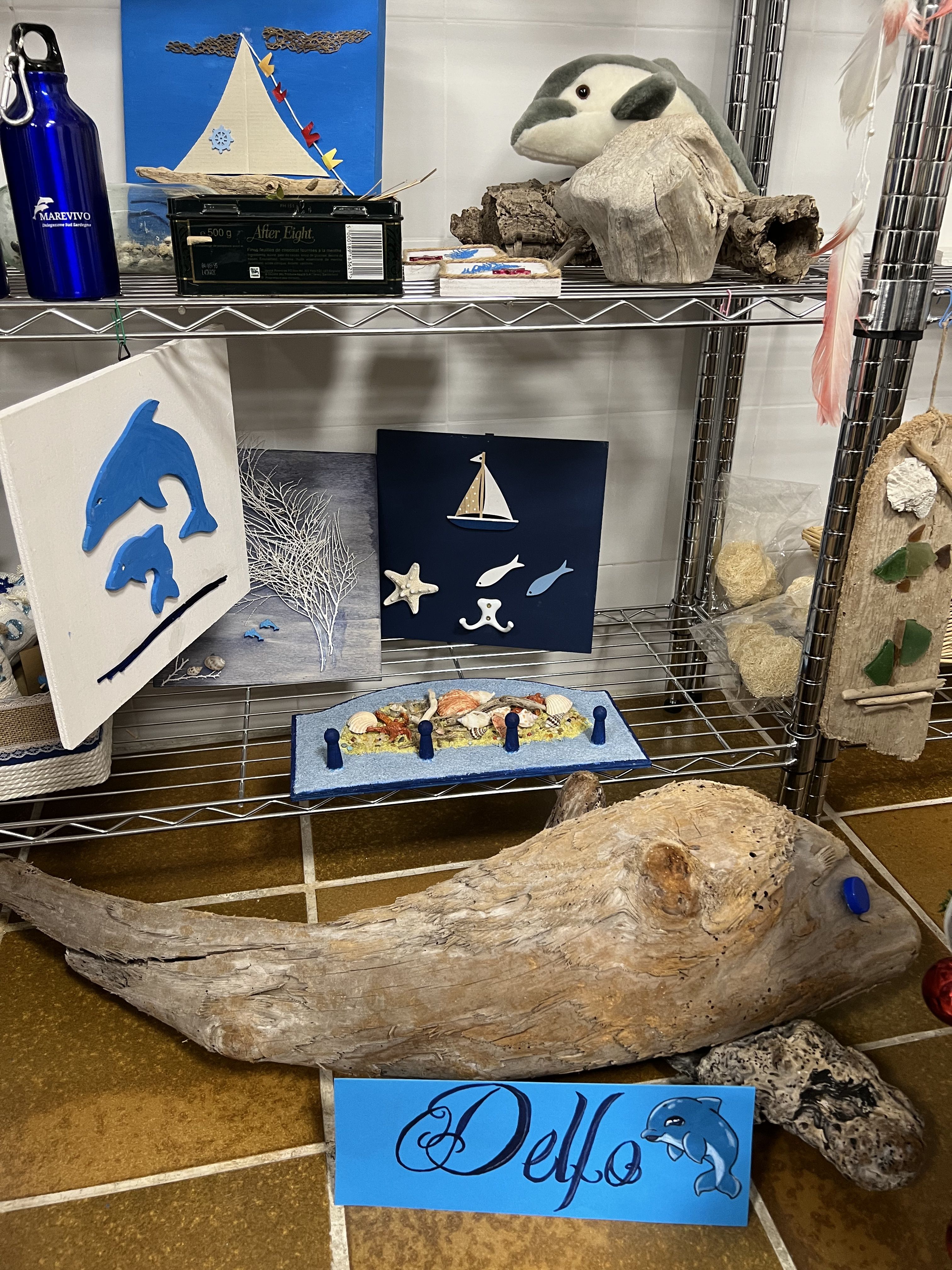
Volunteers use some of the rubbish collected to create bespoke artworks and objects which are then sold to raise funds
Volunteers use some of the rubbish collected to create bespoke artworks and objects which are then sold to raise funds
In 2022, BFFP also launched the ‘plastics education programme’ for teachers worldwide, making a variety of resources available for schools. “The end goal of that is to get involved with other organisations on the ground and run pilots in their localities and then eventually connect with their ministries of education and propose changes in the curriculum,” Tiara said.
Anna shared with me her firsthand account of attempting to integrate environmental practices during her time as a school teacher.
“I remember seeing some kids being very careful with the way the threw stuff away. Or they were very keen to know and constantly asked ‘where do I throw this?’ but others had no clue about recycling. So it left me wondering, why do they not know? And the answer is that their families probably never taught them.”
“This is where teachers should intervene. We’re not just here to teach math or other subjects, we’re also educators and need to educate the kids that polluting is wrong.”
Anna also serves as a real life example of how education effectively nurtures pro-environmental attitudes. During her childhood in Poland, she told me that every year her school would coordinate cleanups around the local woods, a common site for the disposal of unwanted waste. Moreover, the school also implemented an initiative where students were asked to bring paper waste from home, in exchange for money.
“After the school year ended, a waste collector used to come with a van because there were tons of paper waste that each student brought for recycling. And they used to pay us well. I remember my classmates and I used the money for a two-night camping holiday,” she recalled
Lack of support
Education is merely one contributing element among others that can shape someone’s environmental inclinations.
The unanimous consensus among the volunteers from multiple organisations is that there is a pressing need for a shift in overall mentality.
Factors such as convenience and habits are hard to disregard when they’ve been practised for many years.
Erica Cirino is the Communications Manager of the Plastic Pollution Coalition, a US-based environmental movement operating globally which has partnered with BFFP among others. She told me that the coalition was born out of a necessity to redefine the relationship we have with plastic. “It's become such a ubiquitous material that's challenging people to change our culture and change how we interact with this material. It goes beyond just education. It's also about advocacy.”
Erica believes that law enforcement should be one of the major factors making people swap their habits for more sustainable ones. “I've seen how a lack of rules and enforcement really allows for people to just slip back into their old behaviours because it’s more convenient.”
“In some cases, for example when I lived in New York state, there was this tax on plastic bags, but if you wanted one it was only five cents. So you paid five cents, and you could get a single use plastic bag for your shopping, despite the ban. The real question should be why were the plastic bags still offered in the first place?”
And law enforcement regarding the halt of single-use plastic remains a big deal in Italy as well. Despite the European plastic directive banning all single-use plastic, Italy has adopted a series of loopholes which exclude from the guidelines a wide range of materials, such as food packaging, laundry detergents and personal hygiene products.
And a lack of law enforcement ultimately leaves the choice up to the individual, who once again may or may not have pre-existing environmental inclinations — as TMT suggests.
“I have a theory that people who litter, do so because they don’t understand the immediate damage they’re doing to the environment,” Anna told me.
“When it comes to natural disasters, a fire for example, the consequences are clear and people can witness the destruction they cause. But what we’re doing to the beach, when we litter there, is not damaging to us. It will be in the long term, but for now, it damages the ecosystem more and the animals. It doesn’t strictly affect us.”
But for Tiara structural issues are the root of the problem. “There are a lot of questions we need to ask, for example, what policies are enabling corporations to produce as much plastic without accountability for management? Changes in behaviour really need to be preceded by structural change, or at least work hand in hand with it.”
However, in the context of Italy and beach cleaning campaigns, environmental NGOs encounter an additional hurdle — the lack of support from local municipal authorities. In fact, the local councils have to give prearranged consent for the cleanups and coordinate with the local waste collectors to determine the specific locations and timings of the cleanups, so that they can come pick up the rubbish collected by the volunteers.
Elisa told me of some successful cleanup campaigns Legambiente ran in Rimini, a Northern Italian coastal city that overlooks the Adriatic Sea, due to the environment councillor’s personal predisposition towards environmental matters.
But Rimini’s example is not a typical representation of local municipal authorities’ attitudes. Albano and Anna both told me about the difficulties of getting in touch with councillors to coordinate cleanups, which is luckily changing thanks to the results they have made over the years.
“At the beginning, they [the councillors] didn’t even want to hear our ideas, they were scared because we were technically doing something who falls under their responsibility. Maybe they were ashamed, who knows. But now it’s different, sometimes they actually ask us to come to their nearby beach on purpose because it means good publicity for the council,” said Albano.
Perceived Behavioural Control
“There’s a thing called volunteering burnout and it is used to refer to those that decide to stop volunteering after doing so for many years but seeing no results, seeing that the environment is not getting taken care of despite your efforts, and seeing no actual help from the government.”
Unknowingly, what Anna refers to is similar to the last psycho-social driver, perceived behavioural control (PBC), outlined in the Theory of Planned Behaviour. PBC is used to allude to one’s perception of how easy or difficult performing a behaviour will be, including the presence of factors that can impede the actualisation of such behaviour.
In the case of environmental volunteering, it is clear that impediments, such as the aforementioned lack of cooperation from local authorities, are discouraging drivers of pro-environmental behaviours even in people with pre-existing environmental beliefs.
Burnout, as Anna calls it, also most commonly stems from the realisation that what a single person does is just a single drop in an ocean of waste mainly created by multinationals, which are not quite being taken accountable for the destruction of marine environments.
At last, an ever-growing lack of environmental concern in certain individuals is making them become completely desensitised from the problem. “There’s a weird phenomenon that I have noticed at the beach. It happens when I see people sunbathing next to some rubbish. But they don’t even seem to notice anymore, it has become part of the natural environment. How could they not be bothered? It’s so sad,” Anna confessed.
Not an easy way out
Almost all the plastic that has been produced for the past 100 years is still in circulation, considering only 9% of it is currently being recycled globally. It is therefore unsurprising that plastic pollution is normally referred to as a crisis — the problem does not simply seem to subside, despite the green efforts made by nations, multinational corporations and individuals.
As Becker and TMT argue, this death prime has served as a wake-up call for certain people, who have adopted the safeguard of the environment as their personal crusade while others remain unfazed.
“You might think it’s good to clean up the beach. There will be far more people who would rather simply eat burgers. Liberal individualism doesn’t have an answer to that,” concluded Professor Quilley.
But Anna and Albano are still hoping that their efforts, no matter how small, will sooner or later inspire others to do the same.
“It’s kind of like what happened with the tobacco industry. When you smoke now, you know what the consequences are, but for the longest time people had no clue. Now, for the longest time after people have been littering, we are starting to see the consequences. Which is why it’s important to raise awareness.”
“Some people will always turn a blind eye to the problem, just like some people keep smoking even though they know about the damages. It’s a personal choice at the end of the day, and you’ll never be able to convince everyone,” Anna added.
 Built with Shorthand